
The Age of Authenticity: Human-Centric Storytelling in Branding
I’m subscribed to a YouTube channel called Heavy Spoilers. The host, Paul, spent years putting out long, nerdy breakdowns of films — the kind of thing I love, and have probably given several hours of my life to. Recently, he put out a quieter video about how the channel was changing. Algorithms had flooded his feed with AI-generated copycats: robotic voiceovers, stolen thumbnails, paragraphs of generic content churned out about whatever film was trending that week. So he was going to step further into the camera, slow down, and stick to older films — because the things he actually cared about were getting lost in a sea of slop.
He called this the “Age of Authenticity.”
It stuck with me, because brand-side I’d been trying to articulate the same shift for months without quite finding the phrase for it.
What’s actually going on
Every feed I open is full of content that sounds like content. Brochures written in the same LinkedIn tone. Auto-generated imagery of diverse-looking teams who don’t exist. Homepages where “empowering” appears three times on the first scroll.
It’s not that people can’t spot this. It’s that there’s so much of it that “not-that” has become the differentiator. Being recognisably human is now the move.
The numbers back it up, if you care about the numbers:
- Edelman’s 2023 Trust Barometer found 81% of consumers say trusting a brand is a deciding factor in whether they buy.
- 71% of consumers say they worry about being able to trust what they see or hear because of AI.
- 83% of that same group think AI-generated content should be legally required to be labelled.
- Gartner predicts 20% of brands will actively position themselves as AI-free by 2027.
Translation: the baseline people use to judge whether a brand is worth their time has shifted. Polish used to be the signal. Now it’s the suspicion.
Two brands that have been doing this for years
Patagonia
In 2011, Patagonia ran a full-page Black Friday ad in the New York Times with the headline “Don’t Buy This Jacket.” The copy walked through the environmental cost of making the thing and argued, openly, that you probably didn’t need another one. Their revenue grew around 30% over the following year.
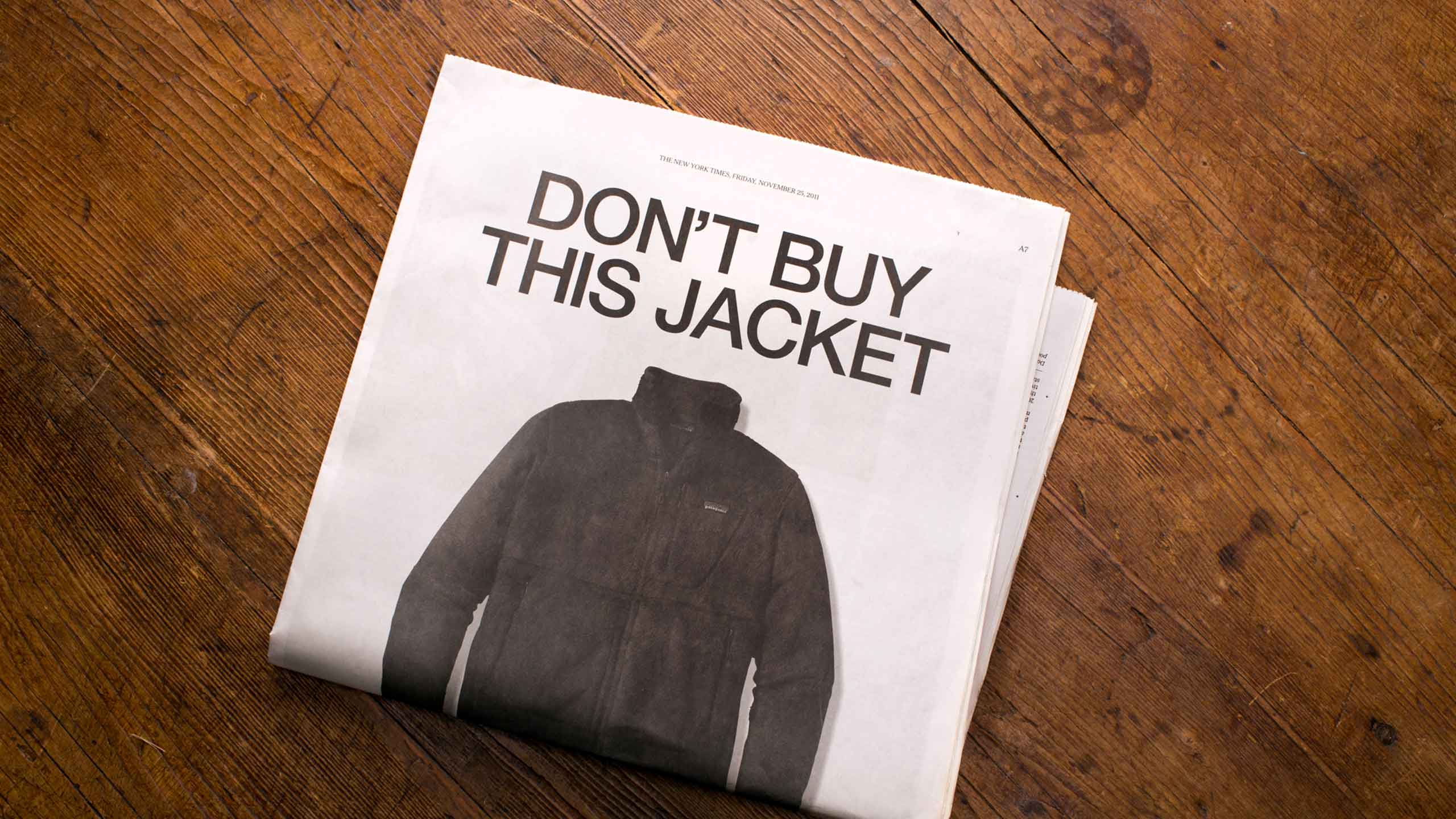 Patagonia advertisement from the Friday, 25 November 2011 edition of The New York Times
The ad worked because every other piece of the Patagonia picture held it up. Worn Wear repair. 1% of sales to environmental groups. An operational reality that matched the tone of the ad. If any of those props had been missing, it would have read as a stunt. They weren’t, so it didn’t.
Dove
Dove’s Campaign for Real Beauty has been running since 2004. Actual women of different ages, body shapes, and skin tones, in place of airbrushed models. One of the early ads asked readers to vote on whether 96-year-old Irene was “withered or wonderful” — a question a traditional beauty ad would not have asked within a hundred yards of its brief.
In the decade after the campaign launched, Dove’s sales went from $2.5 billion to over $4 billion. In 2024, the brand publicly pledged never to use AI image manipulation in its advertising. Twenty years in and the position is still consistent, which is the whole trick.
The common thread with both, and with Ben & Jerry’s, Buffer’s public salary list, and a handful of others: authenticity isn’t a campaign. It’s the by-product of a business organised around what it claims to care about, told honestly.
What I’d actually do if this is your brand
Every post of this kind ends with a tidy list of seven steps. You don’t need seven. You need three, done properly.
Say one honest thing. Pick something your brand believes that most of your competitors wouldn’t. Put it on your homepage. Put it in your pitches. Don’t soften it. If it’s not uncomfortable enough to feel like risk, it’s probably too generic to land.
Show the people, not the stock. Real employees, real customers, real behind-the-scenes. Not a polished “meet the team” grid — the slightly awkward photo that looks like it was actually taken in the office. Authenticity reads in texture, not in claims.
Say when you’ve used AI. Say when you haven’t. Quickest trust-builder available, and very few brands have the nerve to do it. If a bit of copy was drafted with AI and edited by a human, say so. If an image is stock, credit it. Treating your audience like grown-ups tends to make them behave like grown-ups.
That’s it. No funnel. No framework.
The bit most posts miss
Being authentic isn’t a marketing tactic you bolt on. It’s a by-product of a business that’s genuinely organised around what it claims to care about. You can’t campaign your way there. You can only slowly make your operations match the words on your website, then tell the story of the match honestly.
Paul at Heavy Spoilers isn’t “pivoting to authenticity.” He’s just being more himself on camera because everything else has started to feel fake. That’s the shift. The brands that notice it early get to set the pace. The ones who don’t get AI-slop’d into the background.
More on This Kind of Topic
- 28.10.25
I demand real
Algorithms pretend to care. AI captions sound human but aren't. Brands claim community without ever speaking to one. ...
- 21.08.26
Convenience is not your friend
The key problem with “*convenient”* is that if something involves “little or no effort”, there’s bound to be an under...
- 30.04.26
How I Automated My 100 Influences With n8n
My brain is not a filing cabinet — it's a compost heap. Pinterest is where most of the composting happens. I wanted t...