Mentoring for Neurodivergents & Creative Thinkers
Mentoring for Minds that Move Differently
Professional growth shouldn't require you to hide who you are.
The creative industry is built on "fast-paced environments" and "linear workflows"—concepts that don't always align with a neurodivergent brain. If you've spent your career masking, battling executive dysfunction, or waiting until you feel "ready" to take the next step, you aren't the problem. The system is.
I offer professional mentoring for creative minds and neurodivergent thinkers who want to build sustainable, meaningful careers without the burnout.
Book a session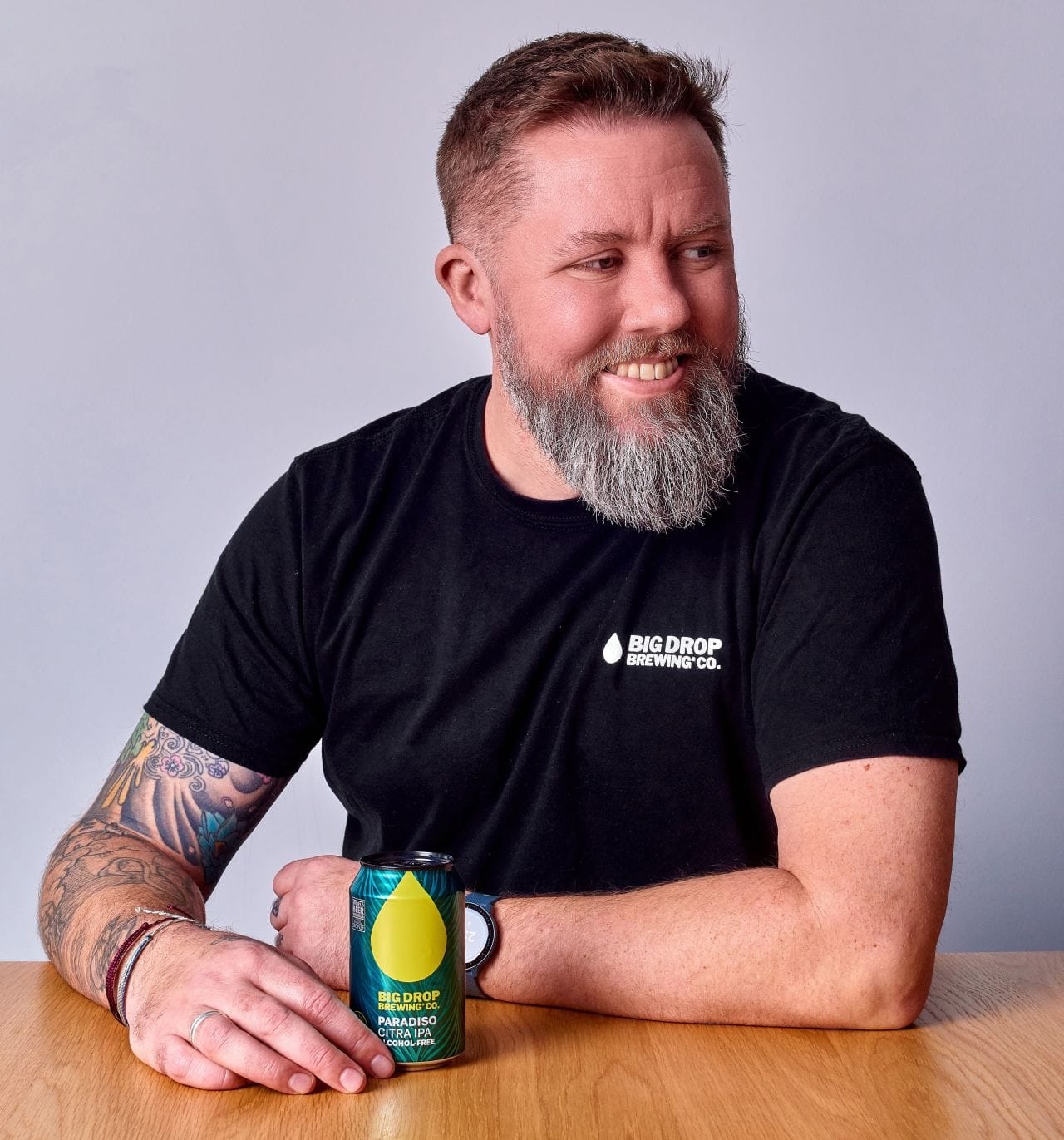
Who Am I?
I'm James Kindred, a brand consultant and creative mentor with over 25 years in the design industry. I've worked with clients ranging from startups to global brands, built my own businesses including the world's most-awarded beer brand, and I've had my own run-ins with mental health and neurodivergence along the way.
Most professional development is built for brains that work in straight lines. Mine doesn't, and probably yours doesn't either. So rather than running you through a programme, I work with what's actually in front of you — the stuck bits, the noisy bits, the thing you've been avoiding — and we build from there.
Disclaimer: The advice and strategies shared during mentoring sessions are based on my personal experience and professional expertise. They are not a substitute for medical, psychological, or legal advice.
James has a way of cutting through the 'shoulds' of the industry to find what actually works for the person standing in front of him. — A. M., Creative Director
How I Can Help
I don't offer a generic multi-step programme. I've tried traditional coaching methods and found them lacking. As a neurodivergent thinker myself, I understand the unique challenges you face, and how that sometimes cannot fit into tidy frameworks. Instead, we work together to build a series of strategies and tools tailored to your specific goals and challenges.
The "Doom Pile"
Practical systems for executive function, admin, and project momentum.
- Body-doubling: Real-time accountability for people who know what to do but just... aren't doing it.
- Working Smarter: Workflows that don't feel like a chore. No rigid grids, no boring maths (I have dyscalculia, so it's best avoided!), just stuff that works.
- The Admin Audit: A "where is my time going?" audit to kill off the soul-sucking tasks you shouldn't be doing anyway.
Strategic Unmasking
Finding a way to show up authentically in business without feeling exposed.
- Boundaries: Learning how to say "no" without being an **** (or feeling like one). We'll figure out what's public, what's private, and why.
- Networking: Building actual relationships instead of doing that exhausting "look at me" dance. Depth over LinkedIn facades.
- Being You, On Your Terms: Creating a public version of yourself that doesn't feel like a costume you have to squeeze into every morning.
Confidence vs. Readiness
Moving past the "not ready yet" trap and taking calculated creative risks.
- The Perfectionist's Pivot: Stop re-working that idea for the fifteenth time and just launch something, anything.
- The "Good Enough" Framework: Nothing is ever really "finished". Knowing exactly when a project is ready to deliver so you can stop over-polishing it.
- Risky Biscuits: Figuring out if you're actually unprepared or if you're just overthinking it. (Hint: it's usually the second one.)
Commercial Strategy
Using my 25+ years in brand design to help you scale your own creative business.
- The Hourly Rate Trap: Stop selling your life in 60-minute chunks. We're pricing for the result, not the clock.
- Portfolio Positioning: Making your work look as valuable as it actually is, so you stop attracting the "budget-conscious" tyre-kickers.
- Human-shaped Growth: Designing ways to grow your income without needing a third pot of coffee and a nervous breakdown.
Creative Sparring
A safe space to pitch, refine, and stress-test your ideas with a seasoned peer.
- Live Pitching: Practicing your pitch until you stop rambling and actually get to the point.
- The "Why it Works" Critique: Looking past the colours and shapes to see if your strategy is actually going to make you money.
- Stress-Testing: Poking holes in your idea until we find the part that’s actually bulletproof.
Who I've worked with
Aside from working one-to-one with individuals, I've collaborated with a variety of organisations:


A Different Kind of "Meeting"
Standard 60-minute Zoom calls can be a sensory and cognitive drain. My mentoring is designed to be accessible and low-friction:
Low-Pressure Dialogue
We can work via video, audio-only, or asynchronous voice notes (Voxer/WhatsApp) if that helps you process thoughts better.
Time to Decompress
I never book back-to-back. Every session has breathing room for us both to decompress and transition.
Body Doubling
If you're stuck on a specific task (like a proposal or a deck), we can use our session time to work "side-by-side" in companionable silence.
No Shame, Just Support
I'm not setting homework. If you don't complete a task, we don't skip the session. We look at why it didn't happen and adjust the system.
Frequently Asked Questions
Being a neurodivergent creative throws up questions that don't fit neatly anywhere. Here are some common ones I get about my mentoring. Naturally, you'll have more — and I'm always happy to answer them.
Everyone is different — and that's the whole point.
My approach bends to fit you, not the other way round. Advice comes from my own lived experience and professional work. I also hold an AQA Qualification in Autism Assessment and Diagnosis, which helps me read wider neurodivergent experiences well beyond my own.
Book a sessionWhat's your cancellation policy?
Life happens, and sometimes your brain refuses to cooperate. Give me 48 hours' notice and we can reschedule. If you're having an overwhelming day and can't do it, just message me. I'd rather reschedule than have you "power through" when you'd rather be resting.
Is our work together confidential?
Absolutely. I treat our sessions with the same NDAs as my high-level strategy work. Whether we're talking about a business pivot or the fact that you're struggling to keep it together, it stays in the room. Full stop.
What if I'm having a "low-verbal" day?
If you can't face being on camera or talking, we have options. We can switch to text, go audio-only, or just body-double in silence. You don't have to "perform" for me.
Do you offer one-off sessions or long-term packages?
Both. Book a "Creative Sparring" session if you're just stuck on one thing. If you need ongoing support, we can talk monthly. Use the link above to book a single session first—it's the best way to see if we actually like each other before committing.
What should I bring to our first session?
Just yourself. Don't waste time making a presentation. If all you have is a "doom pile" of half-finished ideas and a sense of dread, that's a perfect place to start. We'll find the priority together.
How do I know if this is the right fit for me?
Book one session. If my approach works for you and you actually get stuff done, we keep going. If not, no hard feelings — I'm here to help you move forward, even if that means realising I'm not what you're looking for.
Writing & Thinking
I no longer wish to rent my Rubber Duck
LLMs can serve me the information (along with robust citations, don’t take outputs for facts, kids!) to help me shape my thinking, but it won’t solve it for me. AI-generated posters are the perfect example of what Eric Morecambe would call “playing all the right notes, not necessarily in the right order”.
Write A Letter. I Dare You.
Sending someone a letter creates a tactile, physical object that is literally delivered to someone's door. Beyond the content of the letter, there is a deep meaning to going to the trouble of writing, sealing and posting a letter.
Convenience is not your friend
The key problem with “*convenient”* is that if something involves “little or no effort”, there’s bound to be an underlying negative effect; whether that’s giving away your personal data, paying extra for a load of bread delivered on an e-bike or getting Claude to do the heavy lifting for you.
AI Is Over-Delivering. That's the Problem.
AI can generate a Hollywood action scene from a sentence — all spectacle, no story. That feels like generosity. It's actually the oldest trap in design: mistaking more for better. The job was never adding. It was knowing what to take away.
How I Automated My 100 Influences With n8n
My brain is not a filing cabinet — it's a compost heap. Pinterest is where most of the composting happens. I wanted the good bits on my own site, updating itself, with no CMS to open and no fuss in between.
So, You're Looking for a logo designer in Ipswich?
Looking for a design agency in Ipswich to sort your logo? Here's why the logo is the last thing you should think about — and what proper brand strategy starts with instead.
Speak Softly and Carry a Big Stick
Most freelancers don't carry a big stick. They speak softly—politely, professionally, patiently—and when someone decides not to pay, they've got nothing behind the words except frustration. Over half of all freelancers have experienced non-payment. Hope is not a business strategy.
The performance isn't free. It never was.
For anyone who hasn't come across the term: masking is the thing neurodivergent people do when they perform neurotypical behaviour in order to fit in. You adjust your tone, your face, your volume, your eye contact, your fidgeting, your reactions — all in real time, all whilst simultaneously trying to do whatever you're actually supposed to be doing.